Both kinds of car run on Pirelli tyres marked with an L for Lamborghini on the sidewall. The difference is how they wear. An Urus is a 2.2-tonne SUV with up to 650 hp; a Huracán is a light, mid-engined car with very wide rears. Each burns through tyres in its own way.
Lamborghini tyre sizes and pressures
Most common factory sizes for UAE-spec cars. Trims differ — the sidewall of your current tyre and the door placard are the final word.
| Model | Tyre sizes | Factory tyre | Pressure |
|---|---|---|---|
| Lamborghini Urus | 285/45 R21 front / 315/40 R21 rear285/40 R22 front / 325/35 R22 rear285/35 R23 front / 325/30 R23 rear | Pirelli P Zero L, Pirelli Scorpion Zero L | Placard; typically 36–42 psi |
| Lamborghini Huracán EVO / Tecnica | 245/30 R20 front305/30 R20 rear | Pirelli P Zero L, P Zero Corsa | Placard; typically 30–35 psi |
| Lamborghini Huracán Sterrato | 235/40 R19 front285/40 R19 rear | Bridgestone Dueler AT002 | Placard; typically 30–35 psi |
| Lamborghini Aventador S / SVJ | 255/30 R20 front355/25 R21 rear | Pirelli P Zero L, P Zero Corsa | Placard; typically 30–35 psi |
What Lamborghini cars need from a tyre
The Urus is hard on tyres. With huge power, heavy weight and all-wheel drive, rear tyres on a 23-inch setup can be finished in 12,000–18,000 km. The 22 and 23 inch wheels also leave little sidewall, so speed bumps and potholes can bend rims and create bulges. Huracán and Aventador tyres wear fast too, but age is the bigger problem for low-mileage cars. The Sterrato is the exception: a raised Huracán on all-terrain tyres built for gravel and sand, and one of the few supercars we would happily see near the dunes. For Urus owners, an annual wheel alignment helps prevent inner-edge wear caused by the air suspension and rear-wheel steering.
Run-flats, TPMS and fitting notes
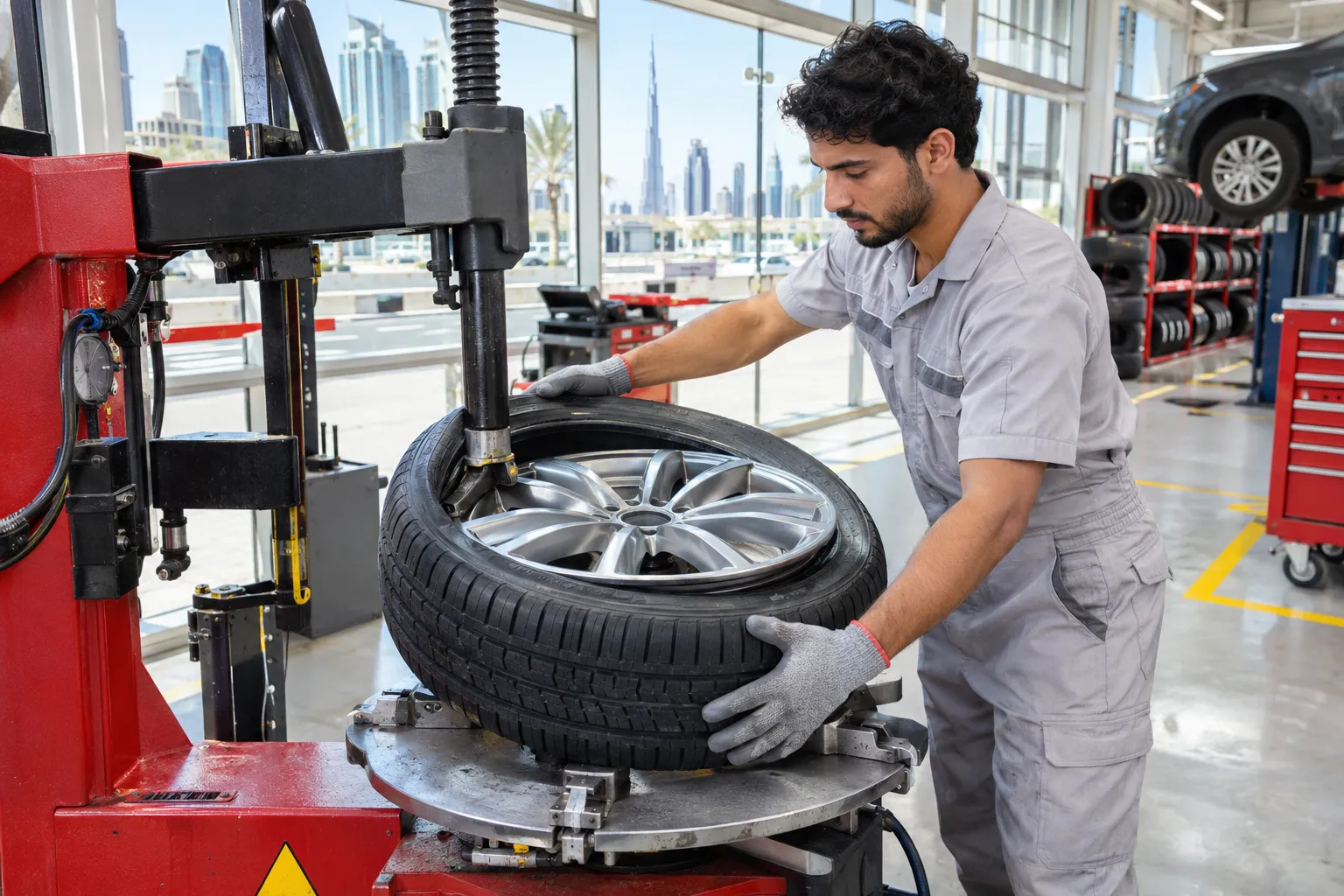
Lamborghini does not fit run-flats, and the Huracán and Aventador have no room for a spare. Each car carries a sealant kit and direct TPMS sensors. The low cars bring a practical problem: a standard trolley jack will not slide under a Huracán's sill, and lifting on the wrong point can crack a carbon or aluminium panel. Use the front-axle lift for ramps and speed bumps, especially at the steep exits of older Business Bay towers. For an Urus with a flat on the drive, our mobile tyre change service can usually swap the tyre on the spot; Huracán and Aventador jobs we prefer to do at the workshop with low-profile equipment and a wheel balancer that will not mark the rims.
Tyre brands we recommend for Lamborghini
Pirelli
Lamborghini's main OE partner; L-marked P Zero and Scorpion tyres are the original spec for Urus, Huracán and Aventador.
Bridgestone
Dueler AT002 is the Sterrato's original all-terrain tyre.
Michelin
Pilot Sport 4 SUV offers a durable alternative for Urus owners who prioritise tyre life.
Tyre problems we see on Lamborghini cars
- Bent 22 and 23 inch Urus rims and sidewall bulges after potholes or speed bumps taken too fast; a straightening job through our rim repair service starts from AED 200.
- Huracáns and Aventadors on tyres older than five years with plenty of tread, which have lost much of their grip.
- Splitters and front lips ground down on basement ramps when the nose-lift was not used.
- An L-marked tyre on one side of an axle and a non-L tyre on the other after a roadside replacement.
- Urus owners using Corsa mode on hot track days with road tyres, then wondering why the rear shoulders are torn.
Lamborghini tyres: FAQs
What does the L on a Pirelli tyre mean?
It shows the tyre was developed with and approved by Lamborghini for that model. Pirelli is the main L-marked supplier, though some models such as the Huracán Sterrato have used other brands.
How long do Urus tyres last in the UAE?
Usually 12,000–25,000 km, depending on wheel size and how often launch control is used. The rears go first; the 23-inch option wears fastest.
Can you change Lamborghini tyres at home?
Urus tyres, often yes, with our mobile van. Huracán and Aventador tyres are best changed at the workshop where we can lift the car safely.