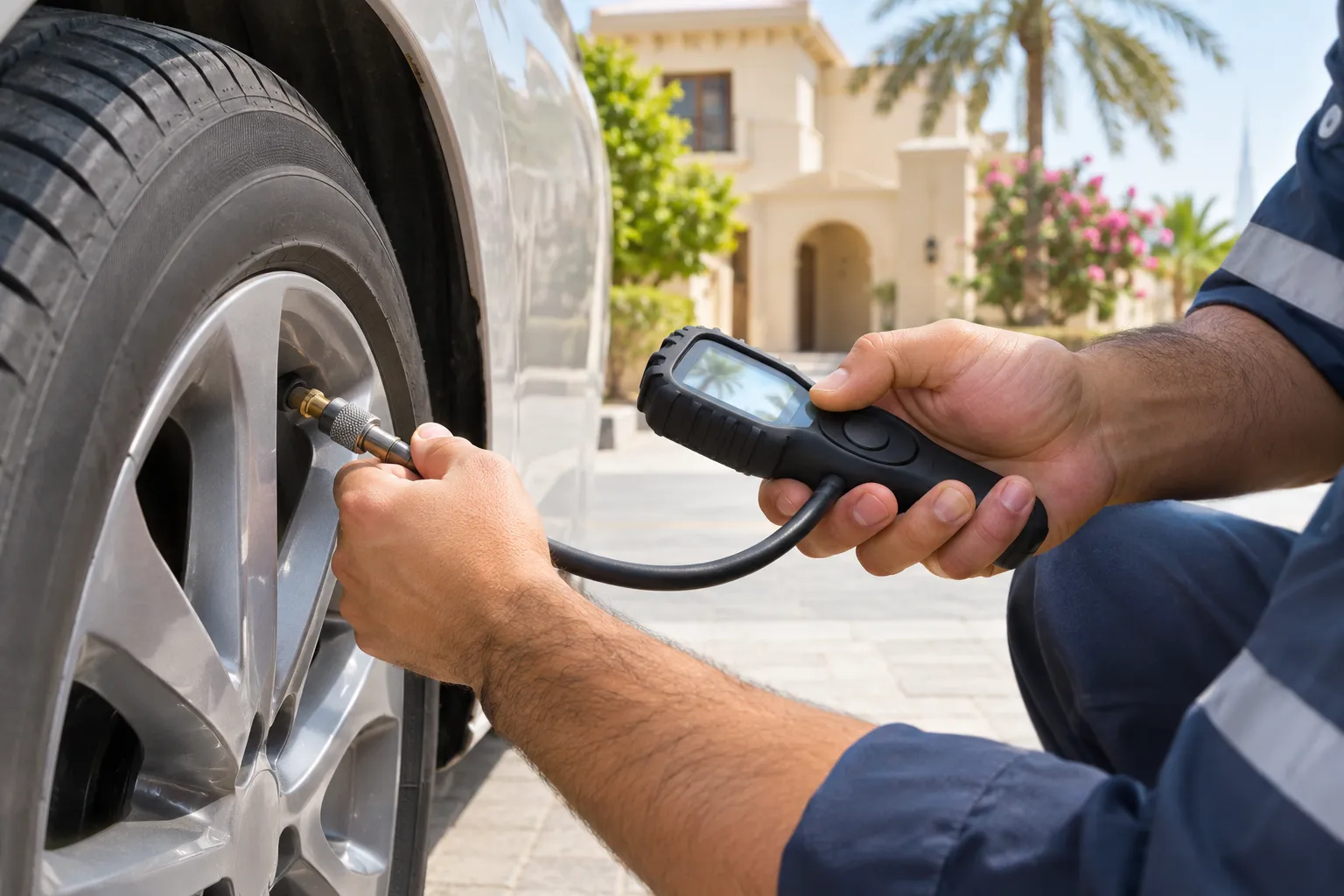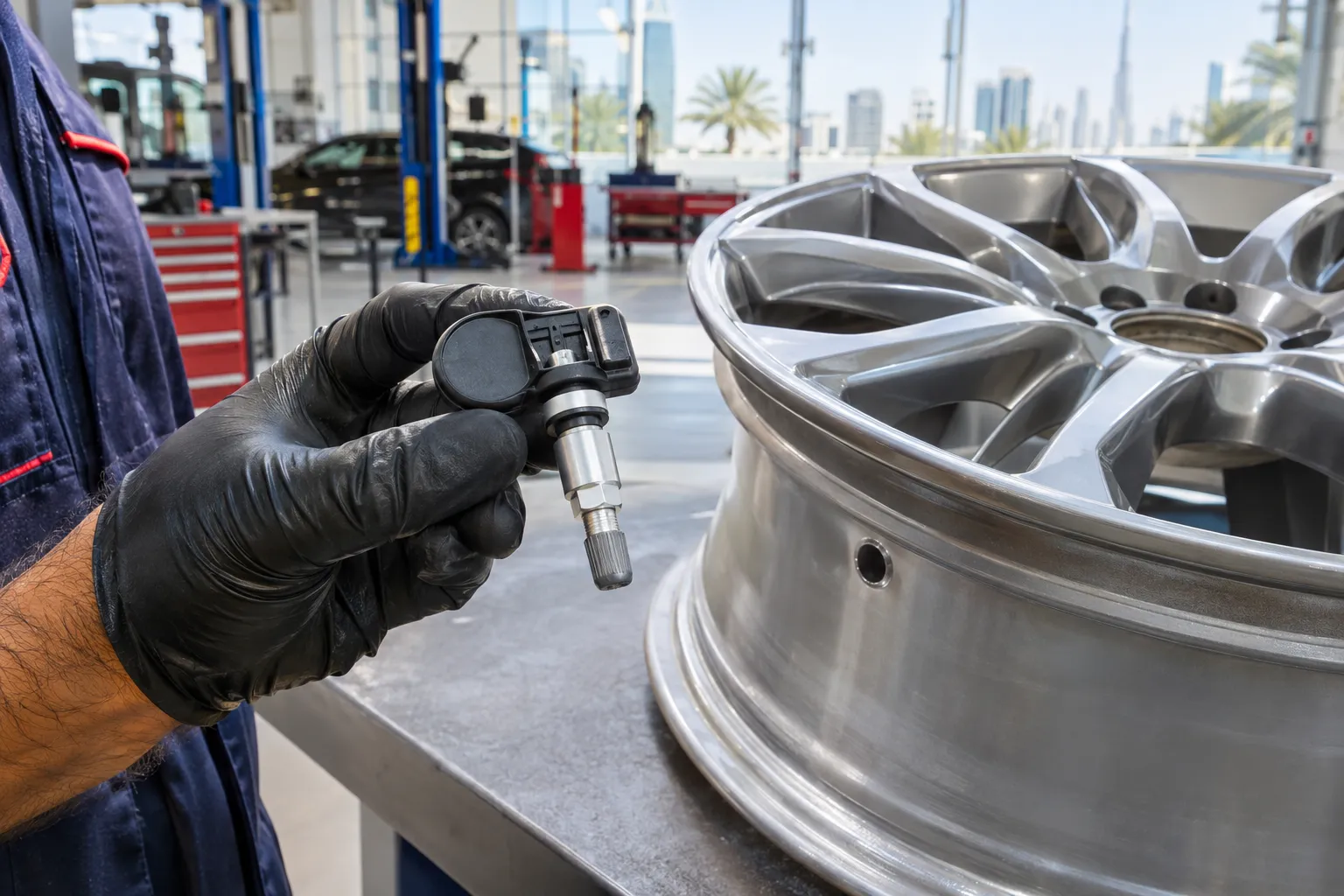
We diagnose TPMS faults with a TPMS scan tool that reads each sensor directly: its ID, pressure, temperature and battery status. That tells us in a few minutes whether the issue is a dead sensor, one that has not been learned to the car, or an actual pressure problem. If a sensor needs replacing, we fit and program a new one, then run the relearn procedure your car needs.
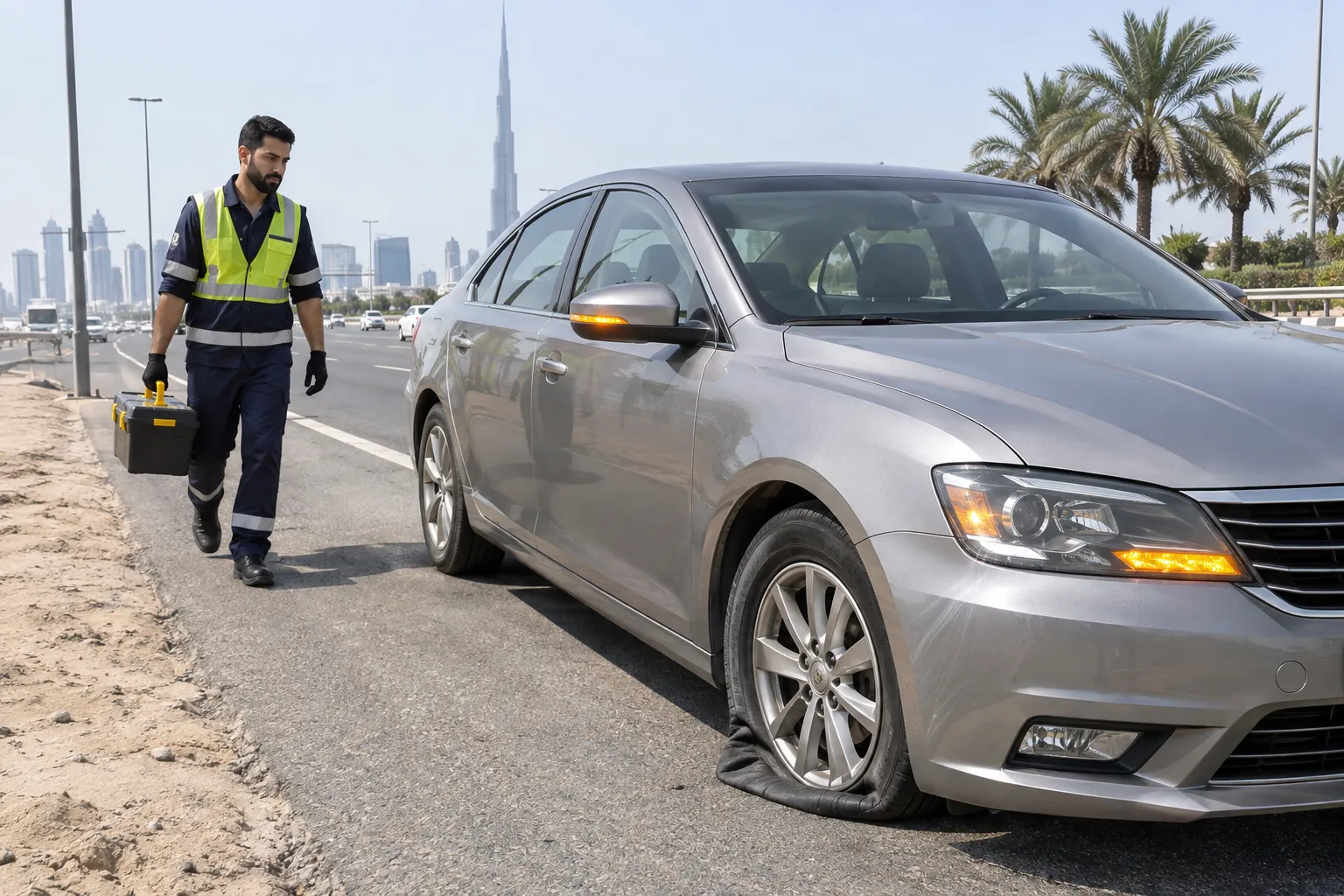
Fitted prices run from AED 220 to AED 450 per sensor, including programming. Work is done at our Al Quoz workshop, or through our mobile tyre service if the car cannot be brought in.
When you need tpms sensor replacement
- The TPMS warning light stays on even though pressures are correct
- The light flashes for about a minute at start-up, then stays on
- One wheel shows dashes or no reading on the pressure display
- Readings appear on the wrong wheel position
- A sensor was damaged during a tyre change or by sealant
- Your car is more than six or seven years old with original sensors
How we do it
- 01
Scan the sensors
We trigger each sensor with a TPMS tool to read its ID, pressure, temperature and battery status.
- 02
Identify the fault
A dead sensor, a damaged valve stem, a sensor not learned to the car, or an actual leak all have different fixes.
- 03
Replace the sensor
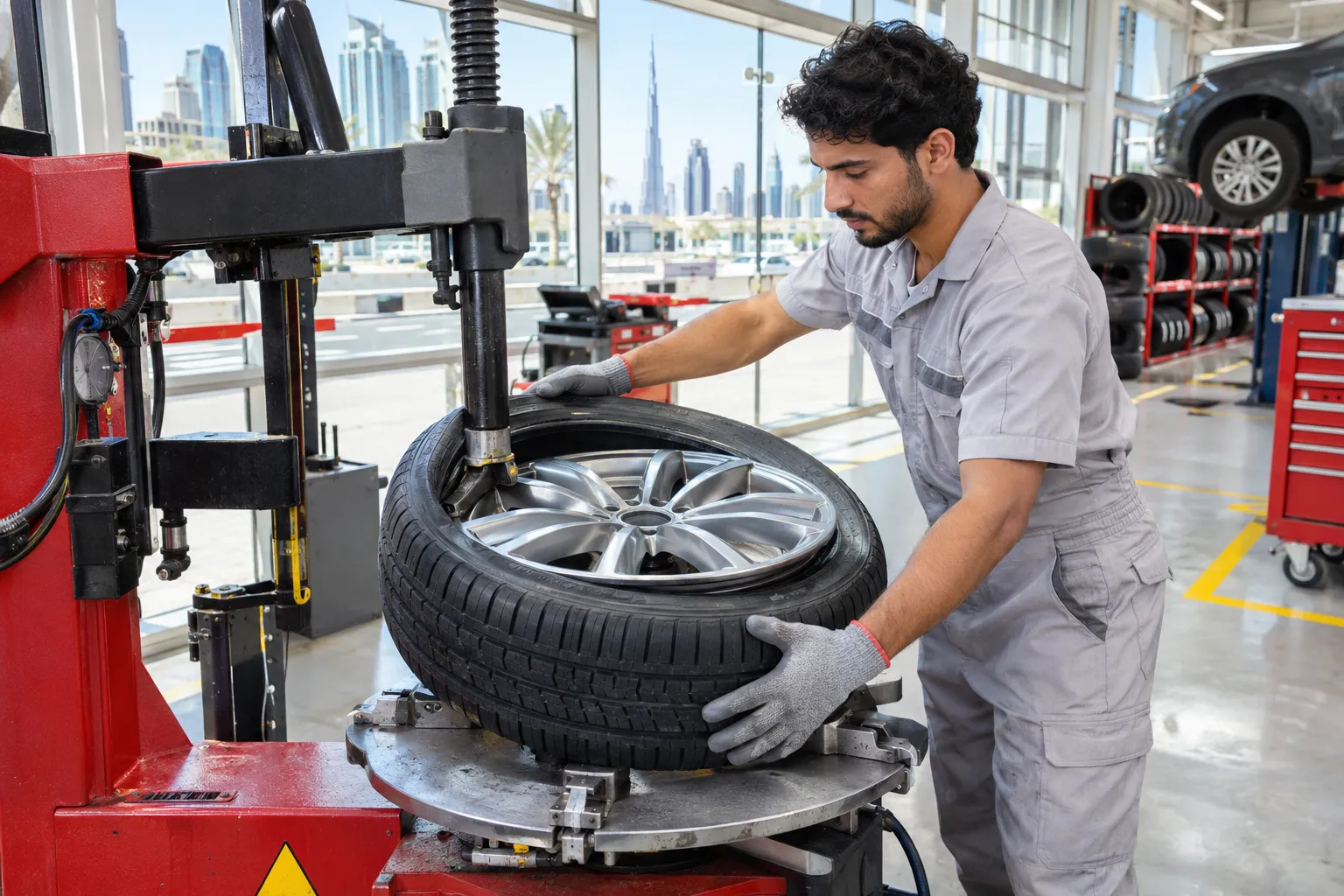
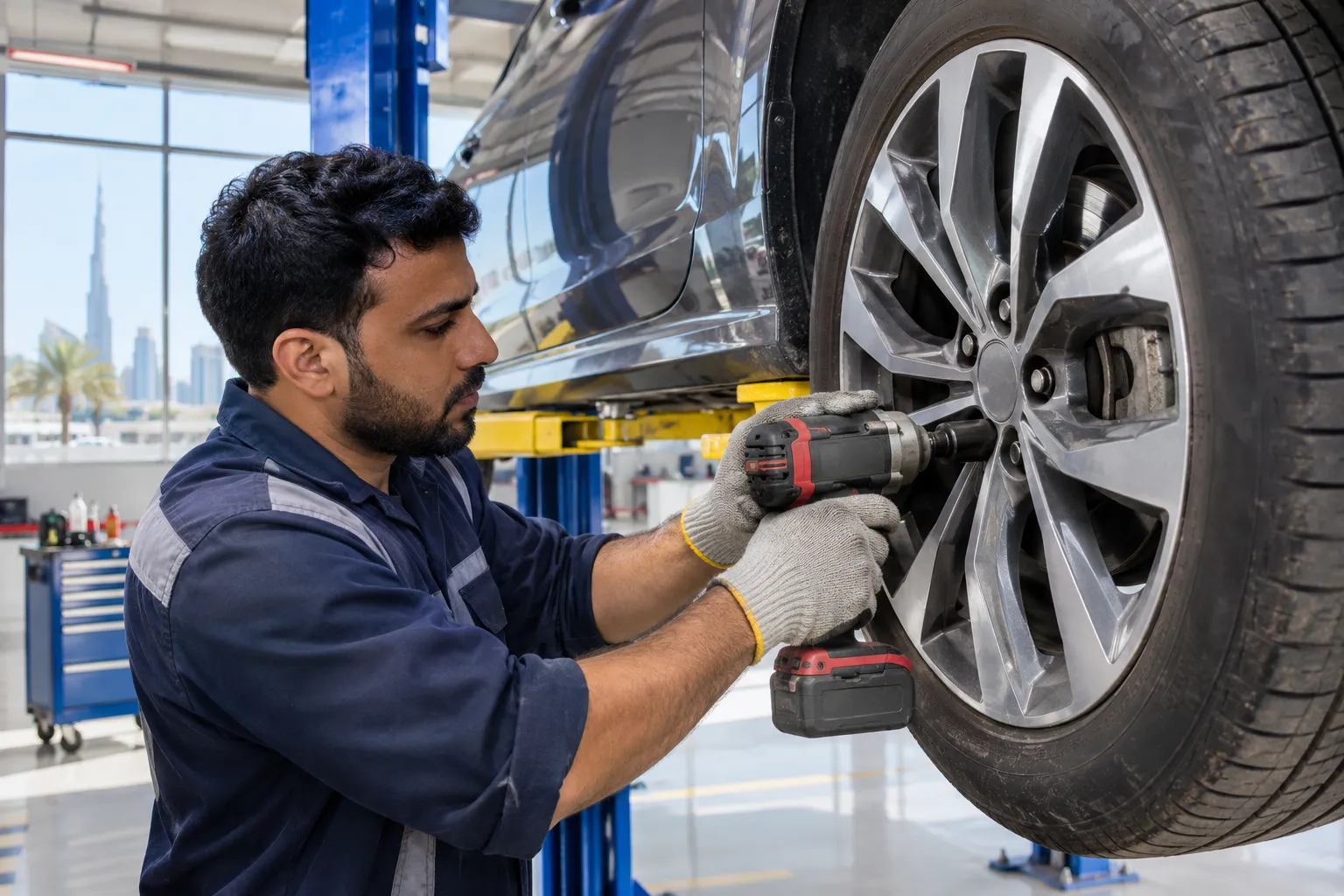
The tyre is broken down on the valve side, the old sensor removed and the new one fitted with a fresh seal, nut and core.
- 04
Program and relearn
The new sensor is programmed or cloned for your car, then learned to the car by auto, stationary or OBD relearn.
- 05
Confirm readings
We check all four readings appear on the dashboard in the correct positions and the warning is cleared.
Direct and indirect TPMS
Direct TPMS uses a battery-powered sensor inside each wheel, usually built onto the valve stem or strapped to the rim. It measures actual pressure and often temperature, and transmits by radio to the car. Most cars that show individual pressures for each tyre on the dashboard use direct TPMS.
Indirect TPMS has no sensors in the wheels. It uses the ABS wheel-speed sensors to detect when one tyre is rotating faster than the others, which happens when it loses pressure and its rolling diameter shrinks. Indirect systems need to be reset through the car's menu or a button after adjusting pressures or changing tyres, and they cannot tell you the actual pressure.
Sensor battery life and UAE heat
TPMS sensor batteries are sealed in and cannot be replaced, so when the battery dies, the whole sensor is replaced. Typical life is five to ten years, depending on how much the car is driven and the sensor design. Heat is a factor: sensors sit inside wheels next to brakes that run hot in summer, and high temperature shortens battery life. In practice, we see many original sensors in UAE cars fail somewhere between six and eight years.
When one sensor fails on an older car, the others are often close behind. It can be worth replacing all four together, especially if new tyres are going on and the wheels are already off.
Relearn procedures: why a new sensor is not plug-and-play
Each sensor has a unique ID that the car must recognise. After fitting a new sensor, the car has to learn it. There are three main methods. Auto-relearn happens when the car is driven for 10–20 minutes above a certain speed. Stationary relearn puts the car into learn mode and uses a TPMS tool to trigger each sensor in order. OBD relearn writes the new IDs straight into the car's computer through the diagnostic port.
Sensors must also match the car's radio frequency, typically 315 MHz or 433 MHz. Imported cars sometimes use a different frequency from the GCC-spec model, which is one reason a generic sensor may not work. Our article on the TPMS warning light covers common error patterns.
Protecting sensors during tyre work
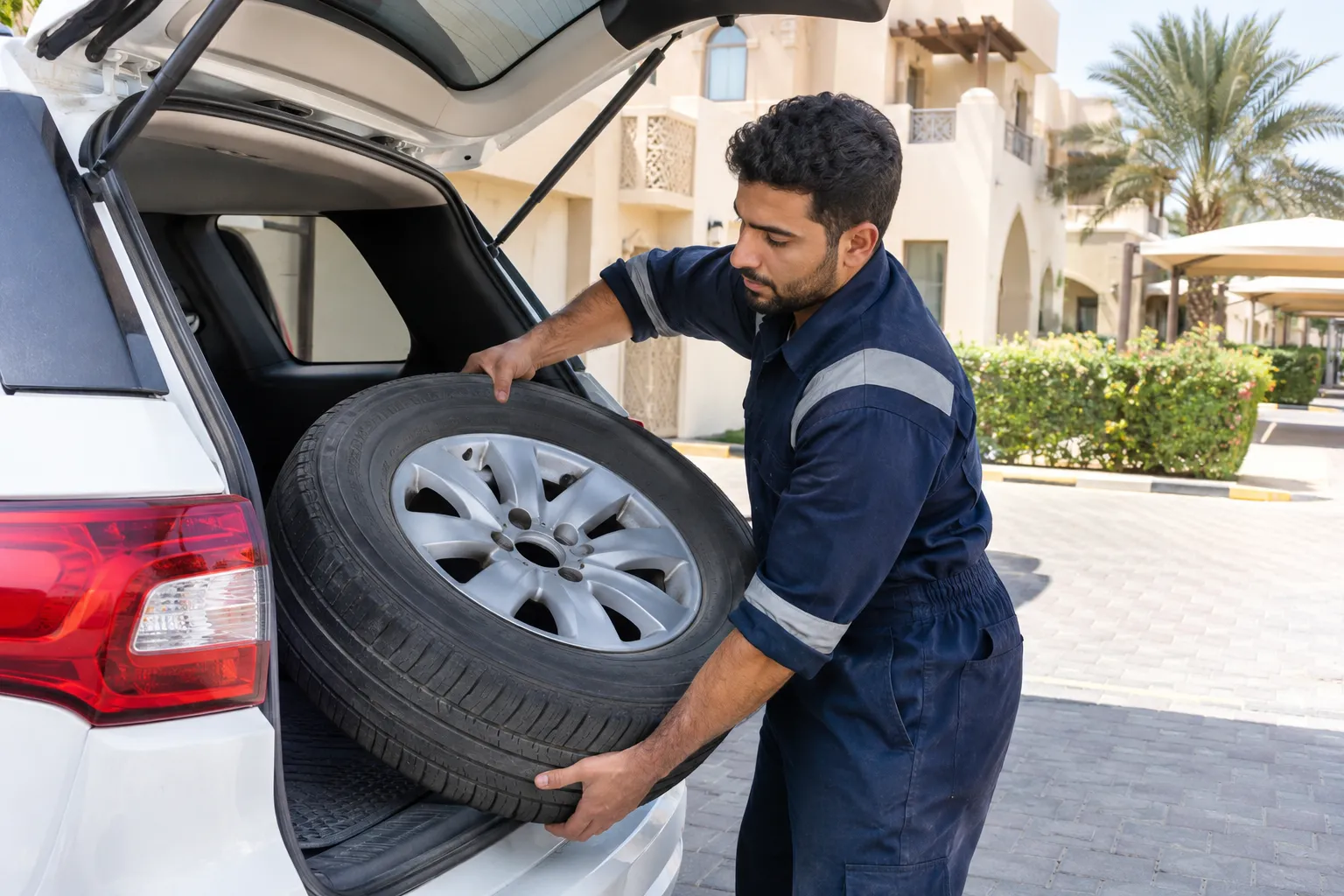
Sensors are easily broken by careless tyre fitting, especially when the bead breaker is placed near the valve. We position the tyre so the sensor is out of the way, and fit a new seal and nut every time the tyre is changed. Sealant from puncture kits can clog the sensor's port; tell us if you have used one. For more on sensor-equipped tyres, see tyre pressure.
TPMS Sensor Replacement prices
| Service | Price |
|---|---|
| TPMS sensor, fitted and programmedDepends on make and sensor type | AED 220–450 per sensor |
| TPMS diagnosis | Free with sensor replacement |
| TPMS valve service kit (seal, nut, core) | AED 15–25 |
Prices in AED, including VAT. Final price confirmed before work starts.
TPMS Sensor Replacement: questions we get asked
How much does a TPMS sensor cost in Dubai?
AED 220–450 per sensor, fitted and programmed, depending on the make and sensor type.
How long do TPMS sensors last?
Typically five to ten years. In the UAE, heat tends to shorten battery life, and many sensors fail around six to eight years.
Why is my TPMS light on when my tyres are fine?
Usually a sensor with a dead battery or one not recognised by the car. A scan tool tells us which in a few minutes.
Can I drive with the TPMS light on?
Yes, if you have confirmed the pressures manually, but the system will not warn you of a real leak until it is fixed.
Do I need new TPMS sensors with new tyres?
Not necessarily. If the sensors are working and under about six years old, they can be reused with a new seal kit.
What is the difference between direct and indirect TPMS?
Direct TPMS uses sensors inside each wheel to measure pressure. Indirect TPMS uses ABS wheel-speed data to detect a low tyre and has no sensors in the wheels.