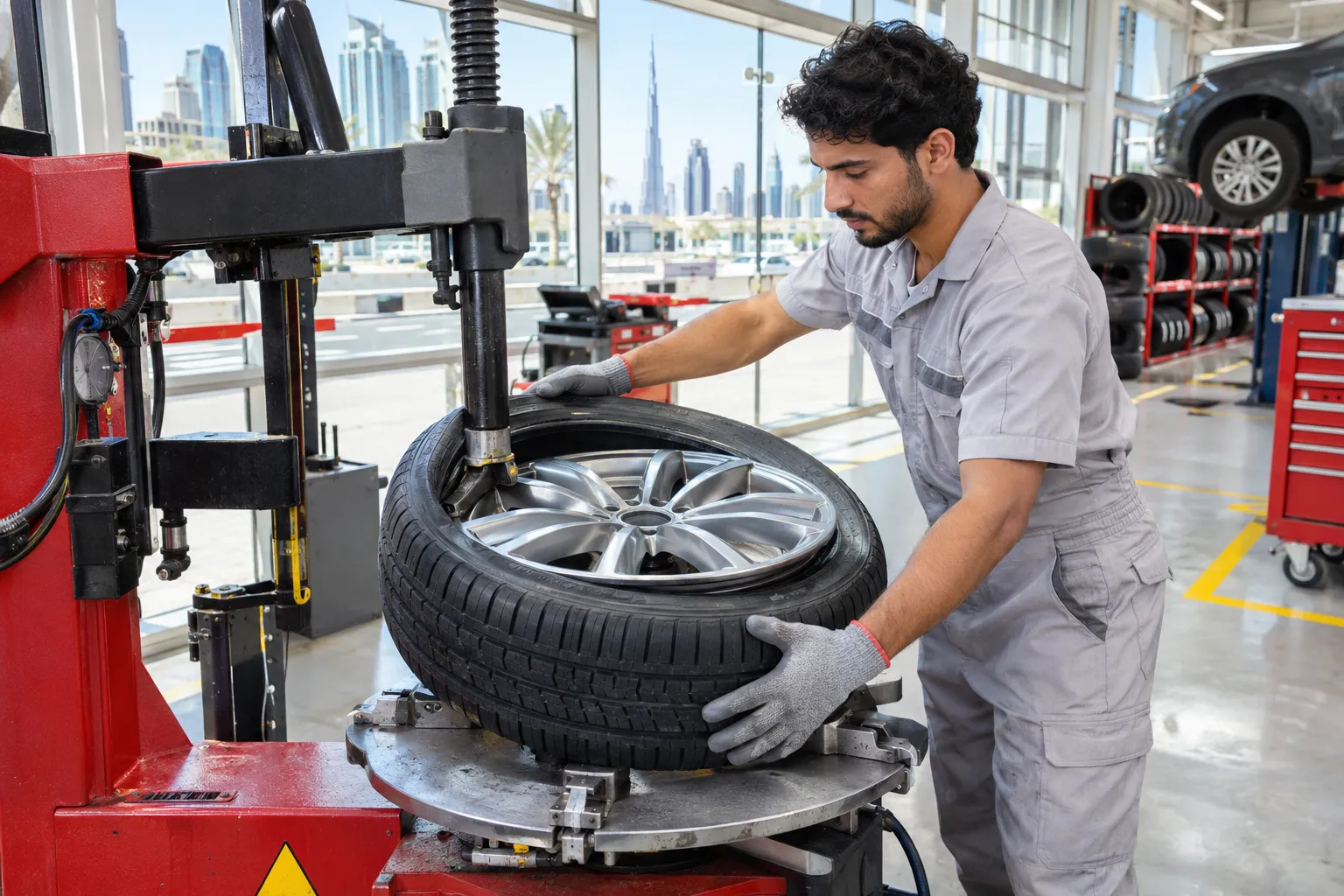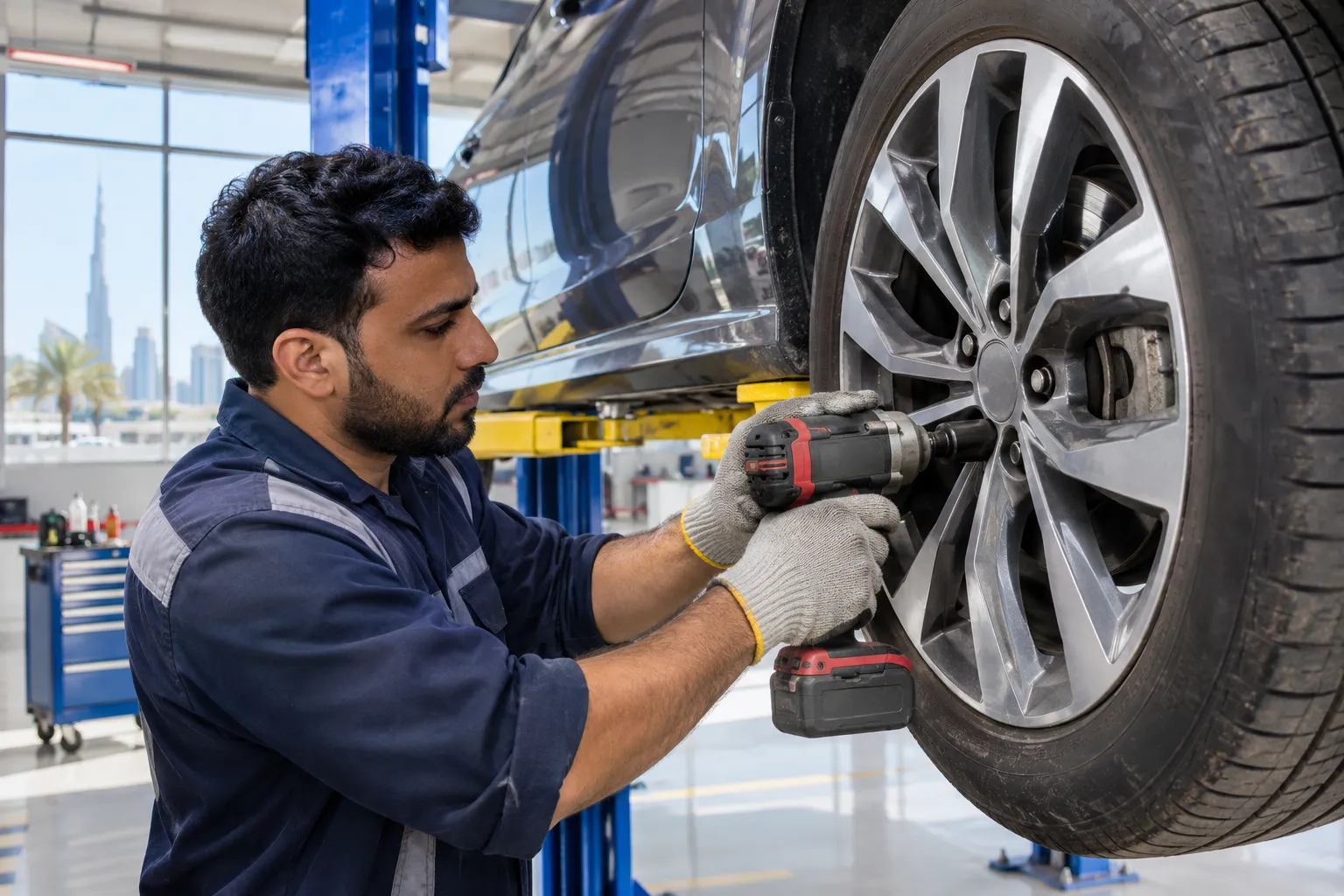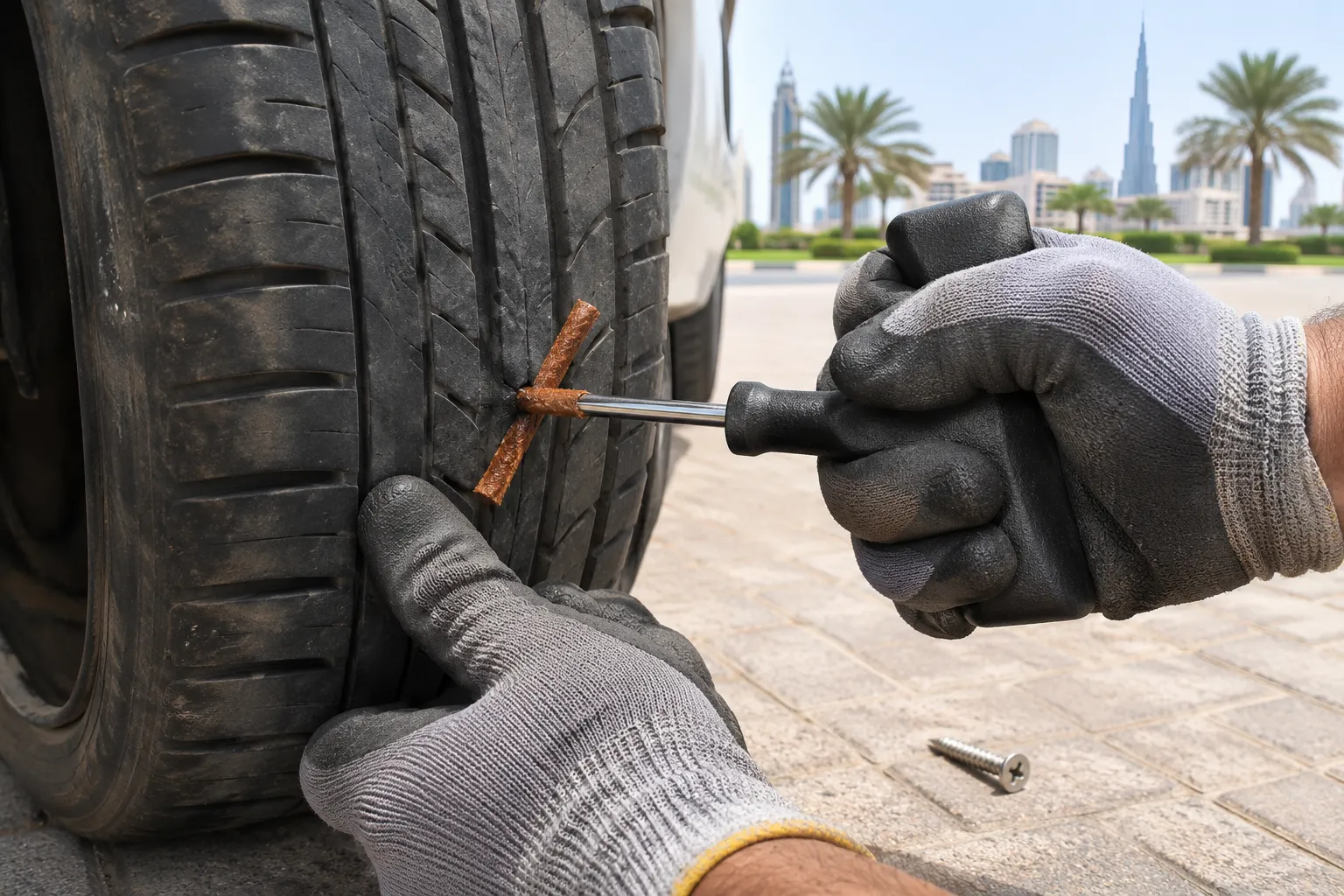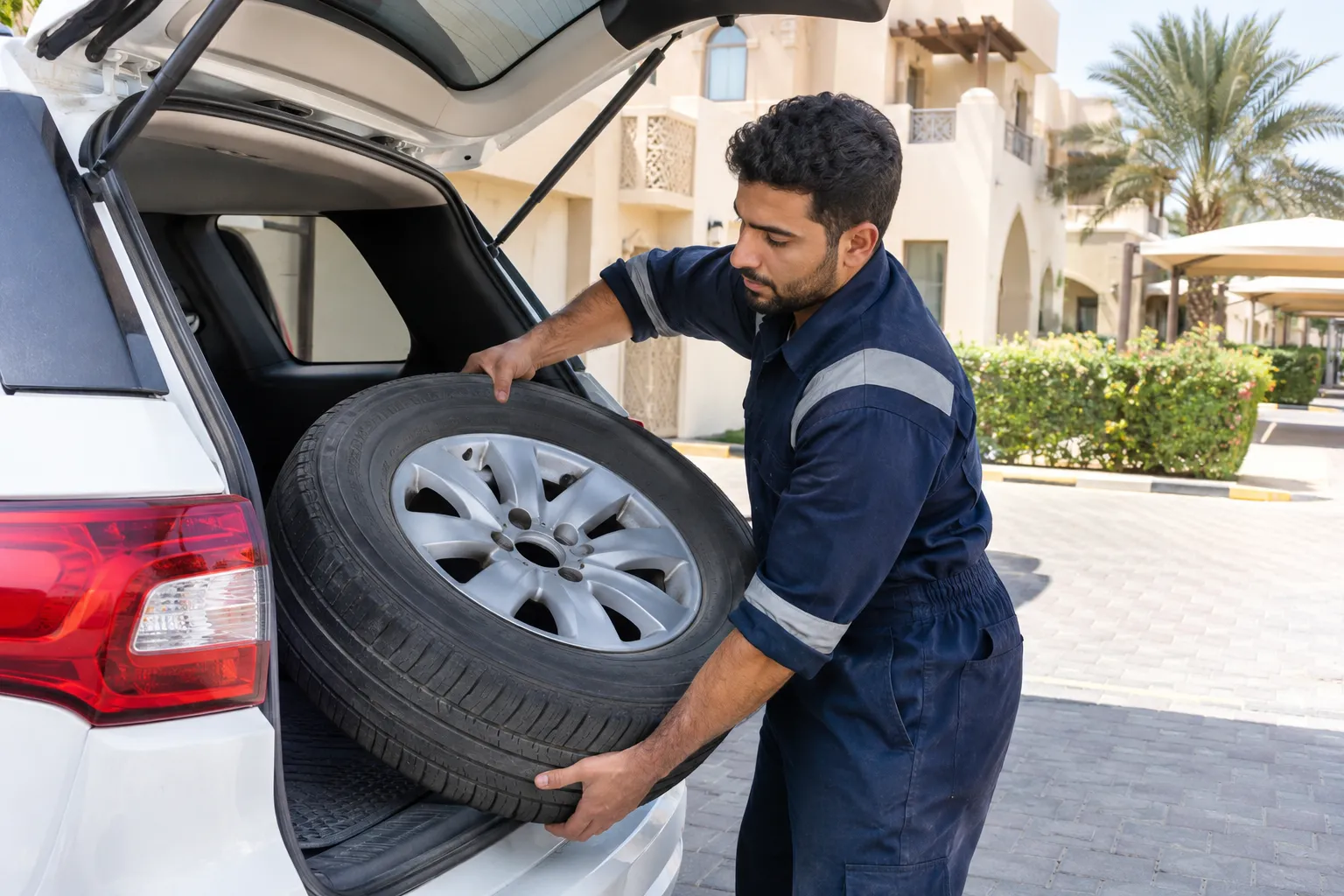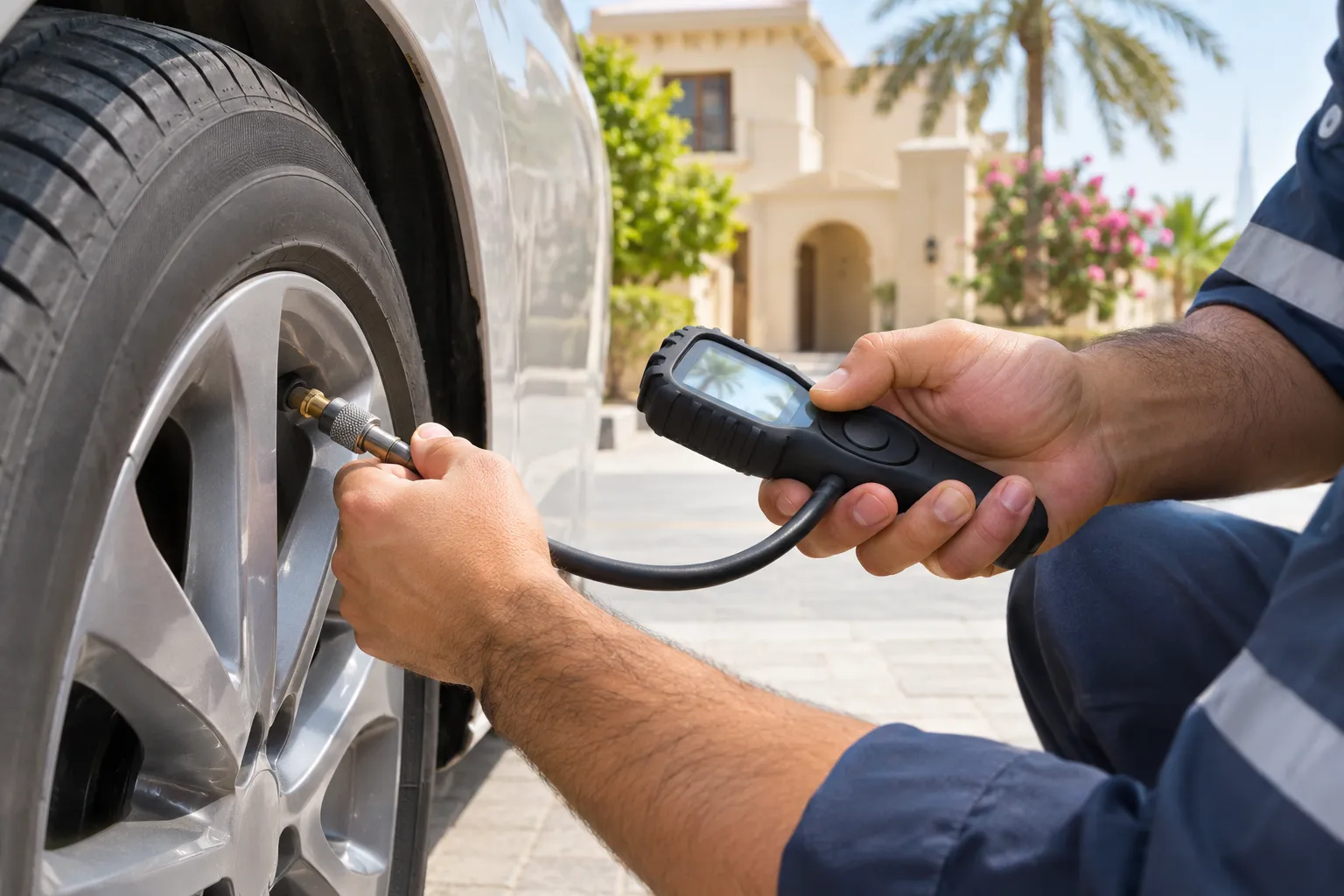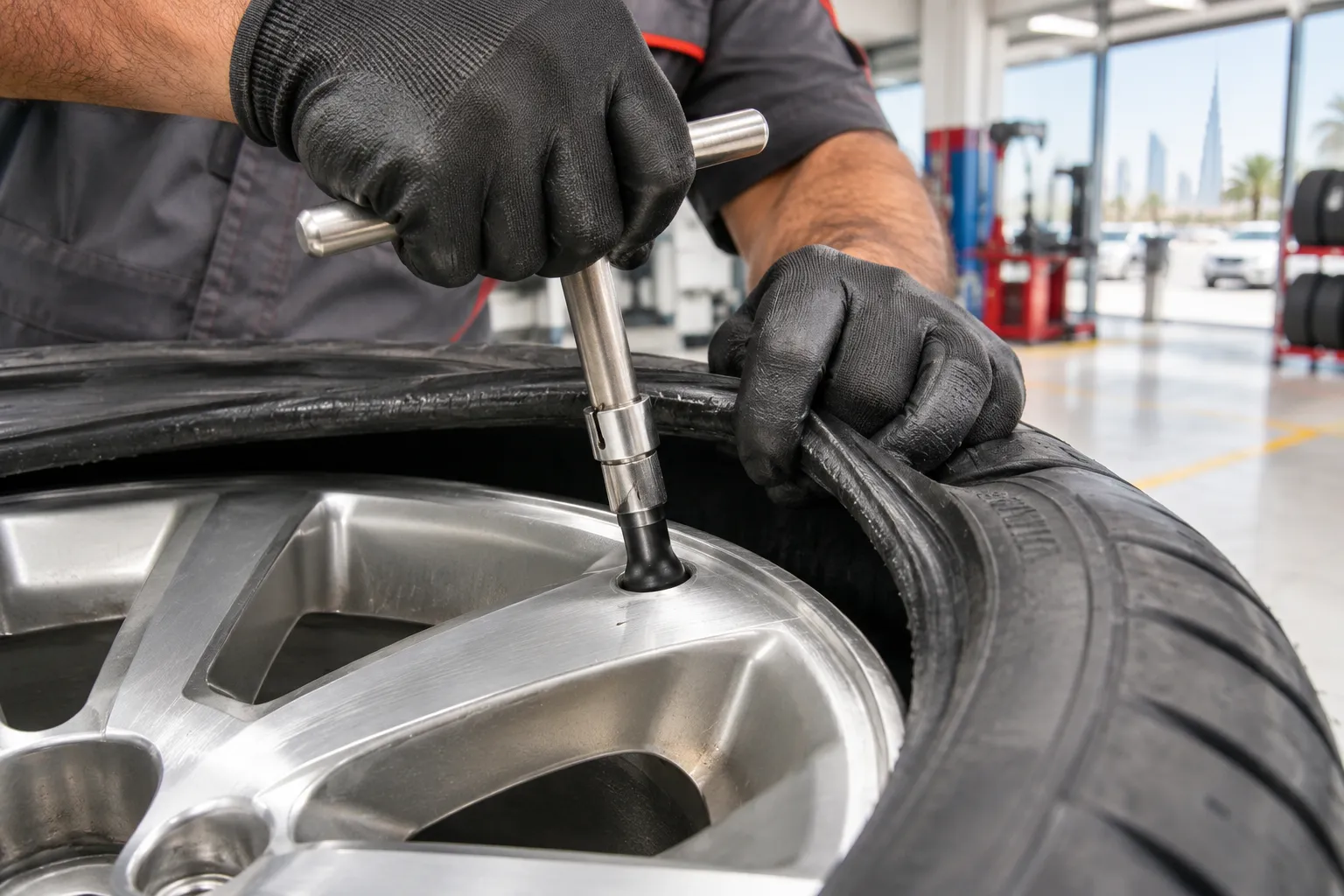
A failing valve is one of the most common causes of slow leaks we find when there is no nail in the tread. Replacing it costs AED 15–25 and takes a few minutes per wheel, though the tyre must be partly removed from the rim to fit a new snap-in valve.
We fit new valves with every new tyre and every puncture repair as standard. If your car uses TPMS sensors built into the valve stem, the valve service kit (seal, nut and core) is changed instead. Read more about TPMS sensor replacement if the sensor itself is faulty.
When you need tyre valve replacement
- A tyre loses pressure slowly with no puncture found
- Visible cracks around the base of the rubber valve stem
- The valve bends easily or feels soft when pressed
- Hissing from the valve when the cap is removed
- Valve caps missing, letting sand into the valve core
How we do it
- 01
Find the leak
Soapy water on the valve shows whether air is escaping from the core, the stem or the base.
- 02
Core or stem?
A leaking core can be replaced without removing the tyre. A cracked stem needs the tyre broken down on that side.
- 03
Fit new valve
The old valve is cut out, a new one pulled into the rim hole with a valve tool, and the bead reseated.
- 04
Inflate and test
The tyre is inflated, leak-tested, and the cap fitted.
- 05
Balance
If the tyre was broken down, it is rebalanced.
Rubber, metal and TPMS valves
Snap-in rubber valves are the most common on passenger cars. They are cheap, reliable and should be replaced with every new tyre. In heat they age just like tyres, and a valve older than the tyre is a weak link.
Clamp-in metal valves are held in with a nut and are used on high-performance wheels, some alloy rims and many TPMS sensors. They do not crack like rubber valves, but their seals and nuts need replacing when tyres are changed.
TPMS valves form part of the sensor. The sensor itself is reused, but the seal, nut and core should be renewed each time to prevent leaks and corrosion.
Why valves fail in the UAE
The rubber in a valve stem faces the same heat and UV as the tyre sidewall, but it is thinner. After a few summers it hardens and cracks at the base. Sand gets into valve cores when caps are missing, preventing the core from seating properly. Car washes using high-pressure jets can bend old valves. All these lead to slow leaks.
That is why we fit a new valve with every tyre. Reusing old valves to save a few dirhams is a false economy. If a tyre keeps losing pressure, a tyre inspection will find the cause. You can also check the tyre care tips for simple habits like always replacing caps.
Valve caps matter
A valve cap is the main seal against dust and moisture. Without it, sand gets in and the core can stick open slightly. Metal caps can seize on aluminium TPMS valves through corrosion; plastic caps are better there. We replace missing caps at no charge. For more on slow leaks and flat tyres, see flat tyre repair.
Tyre Valve Replacement prices
| Service | Price |
|---|---|
| Rubber snap-in valve | AED 15–25 each |
| Valve core replacement | AED 15 |
| TPMS valve service kit | AED 15–25 |
| Metal clamp-in valve | From AED 25 |
Prices in AED, including VAT. Final price confirmed before work starts.
Tyre Valve Replacement: questions we get asked
How much does tyre valve replacement cost in Dubai?
AED 15–25 per valve. A valve core alone is around AED 15. TPMS valve service kits are AED 15–25.
How do I know if my tyre valve is leaking?
Spray soapy water on the valve. Bubbles mean it is leaking. Cracks at the base of the stem are another sign.
Should valves be replaced with new tyres?
Yes. Rubber valves should always be replaced when new tyres are fitted. We include new valves in all tyre fitting.
Can a valve core be replaced without removing the tyre?
Yes. The core unscrews from the stem. A cracked or damaged stem, however, requires breaking down the tyre.
Are metal valve caps better?
Not always. On aluminium TPMS valves, metal caps can corrode and seize. Plastic caps with seals are a safe choice.
Can a bad valve cause a flat tyre?
Yes. A cracked or torn valve can cause a sudden or slow loss of pressure.