Buying Tyres
Are Chinese Tyres Good? An Honest UAE Technician View
Are Chinese tyres safe in UAE heat? A tyre technician weighs Triangle, Linglong, Sailun and Westlake against Korean and Japanese tyres on price and life.
Yes, many Chinese tyres are good enough for everyday UAE driving, as long as you buy a reputable brand, a fresh tyre and the correct load rating. Where they fall behind premium tyres is tread life, wet braking and noise, not basic safety. For small cars on city routes they are often the smartest buy; for heavy SUVs on long highway runs, I’d spend more.
Key takeaways
- Brands like Sailun, Linglong, Triangle and Giti come from big, modern factories and some supply car makers directly.
- Expect a shorter life than premium tyres in UAE heat, and plan your budget per kilometre, not per tyre.
- Unknown no-name brands and old stock are the real danger, not the “Made in China” label.
- Many Japanese, European and Korean brands also produce tyres in China.
The question I get every week
At least once a day a customer at the van asks, half-joking, “Is this a China tyre? Will it burst?” Five years ago I’d have given a more cautious answer. The tyres coming out of the big Chinese manufacturers today are not the tyres of 2010. I’ve fitted thousands of them on Sunnys, Yaris, Attrages and delivery vans, and the failure rate I see is not dramatically higher than mid-range Korean tyres when they are fresh and inflated properly.
What I do see is faster wear and more cracking on cheaper lines, and that’s what this article is about: where Chinese tyres work, where they don’t, and how to buy the right one.
Myth or fact? Common beliefs about Chinese tyres
“Chinese tyres burst in the summer.” Mostly myth. In the bursts I’ve attended, under-inflation, age and overloading were the usual causes, regardless of brand. A 6-year-old premium tyre at 24 psi on a loaded family car is more likely to fail than a fresh budget tyre at the right pressure. Our article on why tyres burst in summer goes through the real causes.
“They wear out twice as fast.” Partly true. On the same car and route, I typically see 25–40% less mileage than a premium tyre. Not twice as fast, but enough to change the maths.
“They’re all the same factory with different names.” False. There are dozens of Chinese tyre makers with very different quality levels. A tyre from a large listed manufacturer and one from a small, unknown plant are different products.
“Premium brands are never made in China.” False. Several European, Japanese and Korean brands run factories in China. The brand’s specification and quality control matter more than the country.
“Cheap means unsafe.” Not necessarily. Unsafe means old, wrongly rated, badly stored or damaged. A tyre that passes the UAE conformity rules and is fresh is roadworthy.
Chinese and budget brands you’ll find in the UAE
| Brand | Origin / group | Where it does well | Watch out for |
|---|---|---|---|
| Sailun | China (Qingdao) | Sedans, crossovers, even wear | Noise rises after the first year |
| Linglong | China (Shandong) | Daily commuters, value SUVs | Wet grip behind Korean rivals |
| Triangle | China (Shandong) | Light trucks, pickups, SUVs | Firmer ride on small cars |
| Westlake | China (Zhongce Rubber) | Small city cars, fleets | Shorter tread life in heat |
| Giti | Singapore-based, large plants in China and Indonesia | Balanced all-round budget choice | Range varies a lot by pattern |
| Thunderer | Budget brand produced in China | Low-cost replacement sizes | Pick fresh stock only |
Non-Chinese budget alternatives worth comparing on price: Zeetex, a UAE-based brand made in Asian factories, and Roadstone, the value line from Korea’s Nexen.
Where Chinese tyres make sense
I’d happily fit a reputable Chinese tyre in these cases:
- Small and mid-size sedans (Sunny, Yaris, Attrage, Accent, Elantra) driven mainly in the city.
- Cars you plan to sell soon. If you’re selling in six months, don’t put AED 3,000 of tyres on it.
- Fleet and delivery vehicles where tyres are checked often and replaced on schedule.
- Low annual mileage where the tyre will age out before it wears out. Since UAE tyres expire five years after manufacture, a premium tyre’s extra tread life is wasted if you only do 8,000 km a year.
Where I’d spend more
- Heavy SUVs and 4x4s that cruise at 120–140 km/h. Heat build-up at speed is where compound quality shows.
- Desert use. Aired-down sidewalls flex hard, and budget sidewalls are more likely to crack or bulge. See our guide to tyres for desert driving.
- Performance and luxury cars, where the suspension is tuned around a specific tyre.
- Drivers who do a lot of Abu Dhabi–Dubai commuting. At 40,000+ km a year, the longer life of a premium tyre usually pays back.
For those cars, a Korean mid-range tyre like Hankook or Kumho is the natural step up before jumping to premium.
The cost per kilometre maths
Here’s how I explain it at the van, using a common 205/55 R16 sedan size and our typical fitted prices:
| Tyre | Price per tyre (approx.) | Typical life in UAE | Cost per 1,000 km |
|---|---|---|---|
| Chinese budget | AED 220 | 30,000 km | AED 7.30 |
| Korean mid-range | AED 380 | 45,000 km | AED 8.40 |
| Premium | AED 600 | 55,000 km | AED 10.90 |
On a small car, the Chinese tyre often wins on cost. Bigger, heavier cars stretch the life gap and the numbers swing toward mid-range or premium. These are workshop averages, not guarantees; your own result depends on pressure, alignment and driving style. For live prices across tiers, see our page on cheap tyres in Dubai.
How to buy a Chinese tyre safely
- Choose a known brand. Stick to manufacturers with a track record in the UAE and a local distributor.
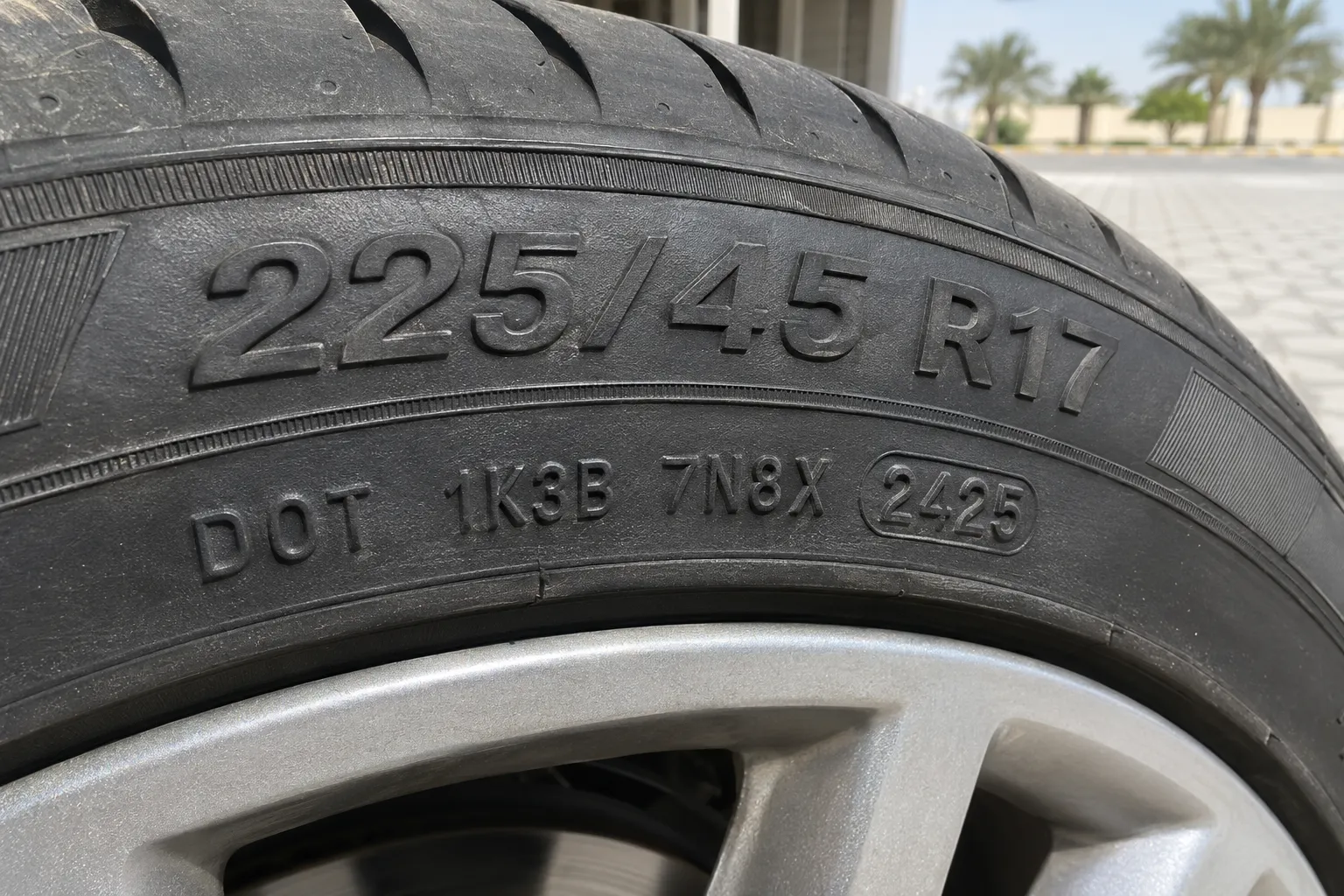
- Check the DOT date. Look for the four-digit code on the sidewall; “2326” means week 23 of 2026. Avoid anything more than a year old if you can. Our guide to reading the manufacture date shows where to look.
- Match the load and speed index to the placard on your driver’s door jamb. Don’t drop a load index to save AED 30.
- Look for storage damage. Flat spots, cracks in the tread grooves or a dusty, faded sidewall suggest the tyre sat outside.
- Fit all four, or at least pairs. Mixing a new budget tyre with a worn premium one on the same axle upsets the handling.
- Get a balance and alignment check. Cheaper tyres are less forgiving of bad alignment.
How Chinese tyres age in UAE heat
Tread wear is only half the story here. The other half is how the rubber ages. Our cars sit in open car parks at 45–50 °C for months, and the sidewalls take direct sun every day. Compounds from cheaper lines tend to show fine cracking around the shoulder and between tread blocks sooner, often from the third year. On the bigger Chinese brands’ mid-tier patterns, I see this much less than I used to.
What this means in practice:
- Plan on three to four years of service, not five, if the car lives outdoors.
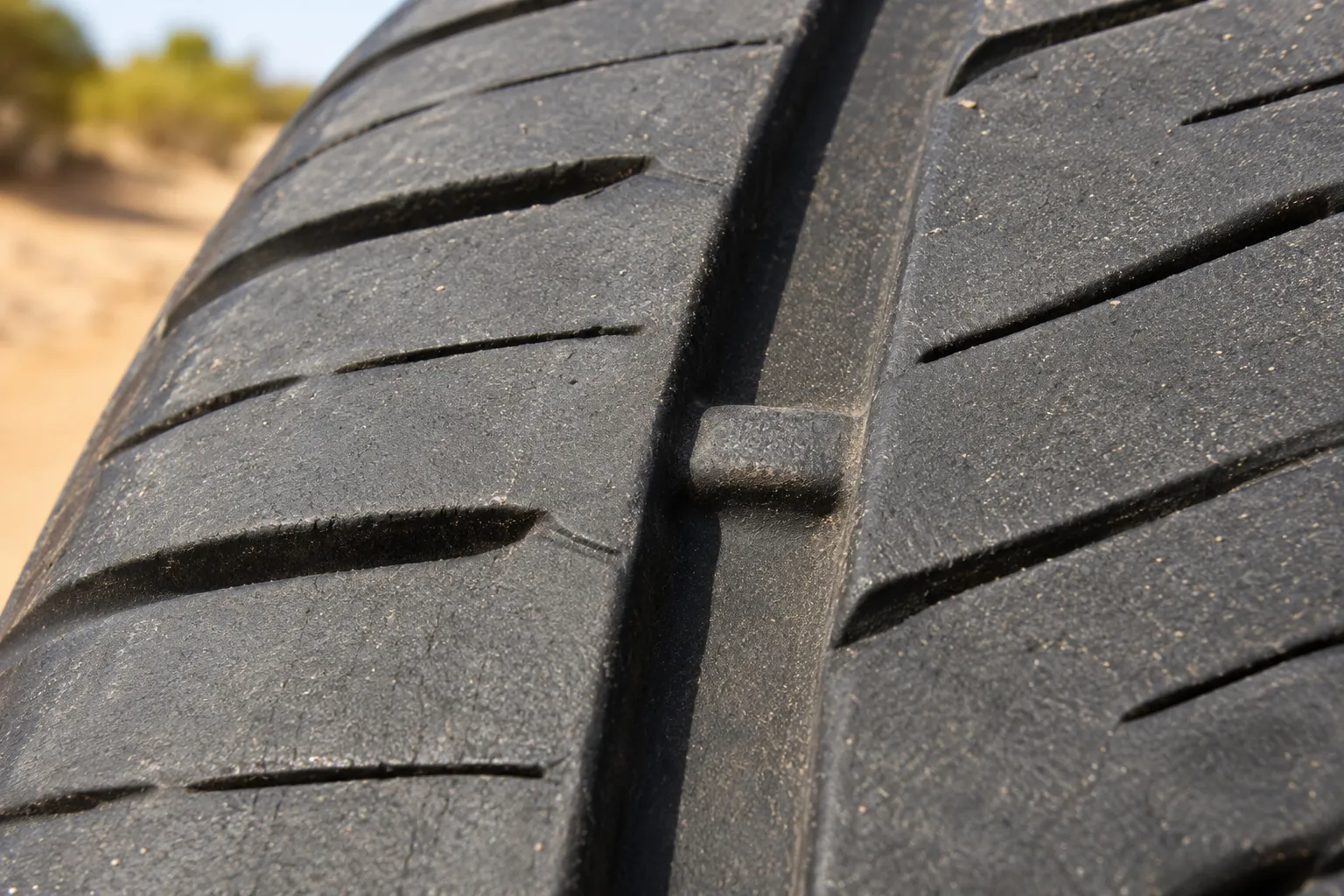
- Look closely at the grooves at every service. Shallow surface crazing is cosmetic; cracks you can push a fingernail into mean the tyre is ageing out.
- Shade helps. A covered parking bay adds real life to any tyre, cheap or expensive.
Warranty and after-sales
Premium brands usually have established distributors, clear warranty terms and a process for inspecting a suspected defect. With budget imports, that support varies. A brand sold through a recognised UAE distributor can be sent back for a defect claim; a grey-market tyre bought from a trader with no paperwork usually can’t. Keep your invoice, and ask the seller who handles warranty claims before you buy. If they can’t answer, choose another tyre.
What I tell my own family
My brother drives a 2017 Sunny about 60 km a day around Sharjah. He runs Sailun tyres and replaces them every two years. My cousin drives a Prado to Al Ain twice a week and does desert trips in winter. He runs Yokohama Geolandar. Both are the right choice for those cars. The question isn’t “Chinese or not” but “what does this car do every day?”
Getting the right tyre fitted
If you’re weighing a Chinese tyre against a Korean or Japanese one, send us your tyre size and how you use the car and we’ll quote a few options side by side. Compare the full list on our tyre brands page or read our ranking of the best tyre brands in the UAE. When you’re ready, our team fits new tyres at the Al Quoz workshop or at your door, with balancing and valves included.
Frequently asked questions
Which is the best Chinese tyre brand in the UAE?
From what we fit and later remove, Sailun and Linglong give the most consistent wear, with Triangle strong on SUV and light-truck sizes. Westlake is a decent low-cost option for small cars on short trips.
How long do Chinese tyres last in Dubai?
On a typical sedan doing city and highway driving, expect roughly 25,000–40,000 km, compared with 45,000–60,000 km from many premium tyres. Heat, pressure and alignment change these numbers a lot.
Are Chinese tyres legal in the UAE?
Yes. Tyres sold through legitimate UAE dealers must meet the national conformity scheme. The legal risks come from age (over five years from manufacture) and wear, not from the country of origin.
Should I put Chinese tyres on my SUV?
For a light crossover used in town, a fresh tyre from a reputable Chinese brand with the correct load index is fine. For a heavy 4x4 that cruises at high speed or goes into the desert, I would spend more on a mid-range or premium tyre.
About the author
Fazir Kamal — Fazir Kamal is a tyre technician with five years of hands-on work on UAE roads — roadside punctures on Sheikh Zayed Road at 2 a.m., run-flat fitments in DIFC basements, alignment on desert-driven Patrols. He writes and reviews the technical guides on TyrePuncture.ae.