Tyre Pressure
Tyre Pressure in UAE Summer: What PSI to Run in the Heat
What tyre pressure to run in a UAE summer, why hot readings mislead, and how to check car tyre pressure correctly when the asphalt hits 60–70 °C.
Run the pressure printed on the placard inside your driver’s door, measured cold, all year round. Do not lower it for summer. Expect readings 3–5 psi above that figure after driving in the heat, and leave that extra alone; it is normal and the tyre is designed for it.
Almost every summer argument I have with drivers about tyre pressure comes down to one of the myths below. Let’s go through them.
Key takeaways
- The correct pressure is the “cold” figure on the door placard, not the “max” figure on the tyre.
- Cold means parked for three hours or driven less than 2 km.
- Never let air out of a hot tyre to bring it down to the placard figure.
- Under-inflation, not over-inflation, is the main cause of summer blowouts.
- Check monthly, and every two weeks from June to September.
Why summer is hard on tyre pressure
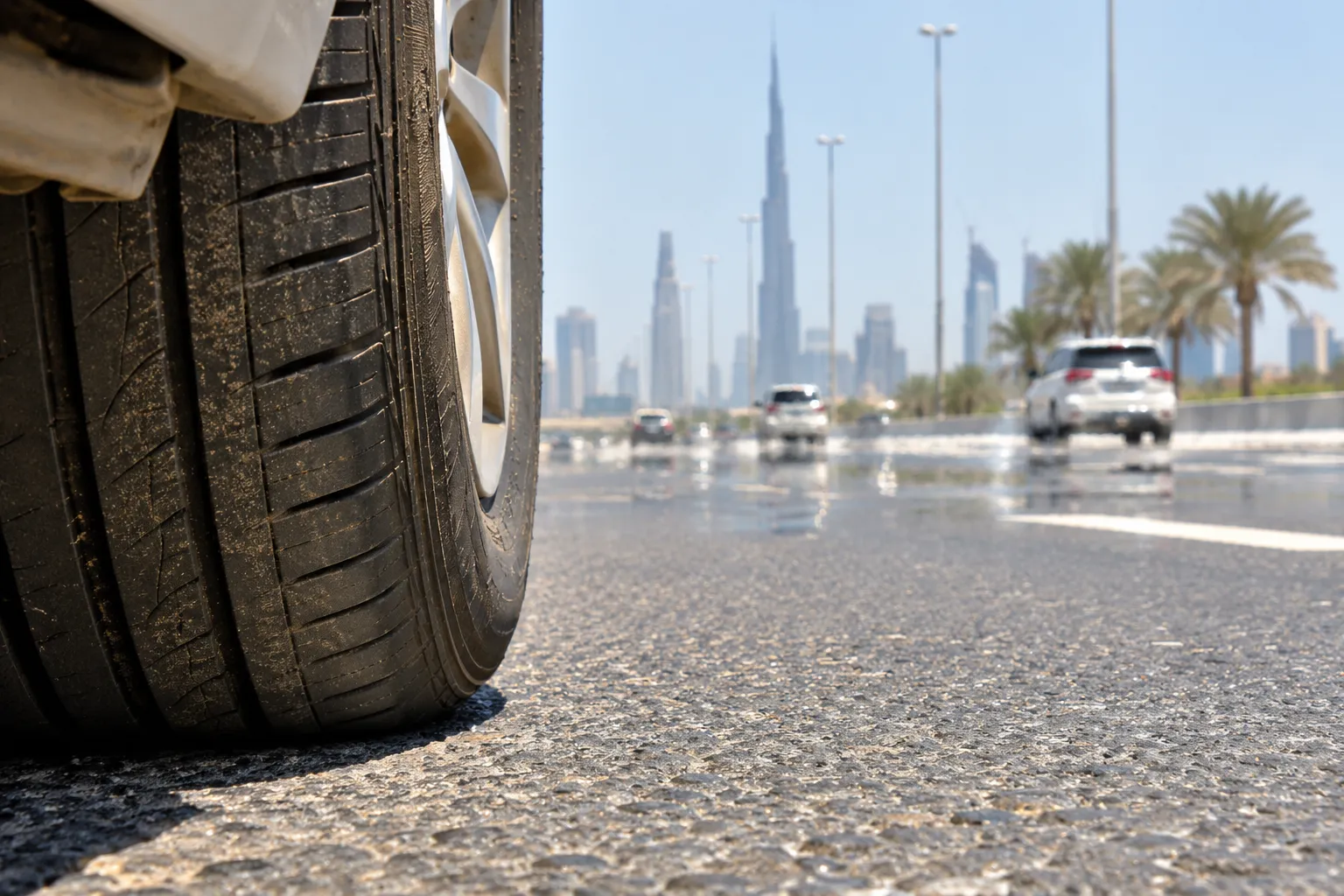
Air in a tyre expands with heat. As a rule of thumb you gain about 1 psi for every 5–6 °C of temperature rise. In July the road surface on Sheikh Mohammed bin Zayed Road can reach 60–70 °C, the air is in the mid-40s and the tyre itself, after twenty minutes of motorway driving, runs hotter still.
At the same time, rubber is slightly porous. Every tyre loses 1–2 psi a month through the casing and valve even without a puncture. So in summer you get two things happening together: daily swings from heat and a slow, steady loss underneath them. The swings hide the loss, and drivers end up on tyres that are 6–8 psi low without realising.
Myth 1: “Let some air out in summer because it expands”
This is the one I hear most, often from well-meaning relatives. The logic sounds right, but it’s backwards.
A tyre that’s under-inflated flexes more each revolution. Flexing creates heat inside the rubber and the steel belts. That heat is what weakens a tyre on a long run to Abu Dhabi or Al Ain. Lowering the pressure increases the flex, which increases the heat. A tyre at the correct pressure runs cooler than a soft one, even though its pressure reading is higher.
Car makers set placard pressures knowing the car will be sold in hot climates. Use them.
Myth 2: “The number on the tyre is the pressure to use”
The sidewall says something like “Max. Press. 300 kPa (44 psi)”. That’s the limit the tyre can hold, not the pressure for your car. Running a 35 psi car at 44 psi gives you a harder ride, less grip and faster wear in the centre of the tread.
The figure you want is on the placard on the driver’s door jamb, sometimes on the fuel flap or in the manual. It often lists two values: a normal load and a full load (all seats and a loaded boot). For a family trip to Hatta with the boot full, use the full-load figure. Our tyre pressure guide covers how to read those placards.
Myth 3: “I can check pressure any time at the petrol station”
You can, but you have to interpret the reading. Here is roughly what a tyre set to 34 psi cold will show in different conditions:
| Situation | Typical reading | What to do |
|---|---|---|
| Car parked overnight in a basement, checked before driving | 34 psi | This is your true cold figure; adjust here |
| Parked outside all morning in July sun, not driven | 36–37 psi | Read it, don’t bleed it |
| After 10 minutes of city driving | 36–38 psi | Normal |
| After 45 minutes on the highway at midday | 38–40 psi | Normal; do not let air out |
| Reads 30 psi after a highway drive | 30 psi | Actually about 4–6 psi low cold; top up and look for a leak |
That last row is the important one. If a tyre shows the placard figure when it’s hot, it’s under-inflated.
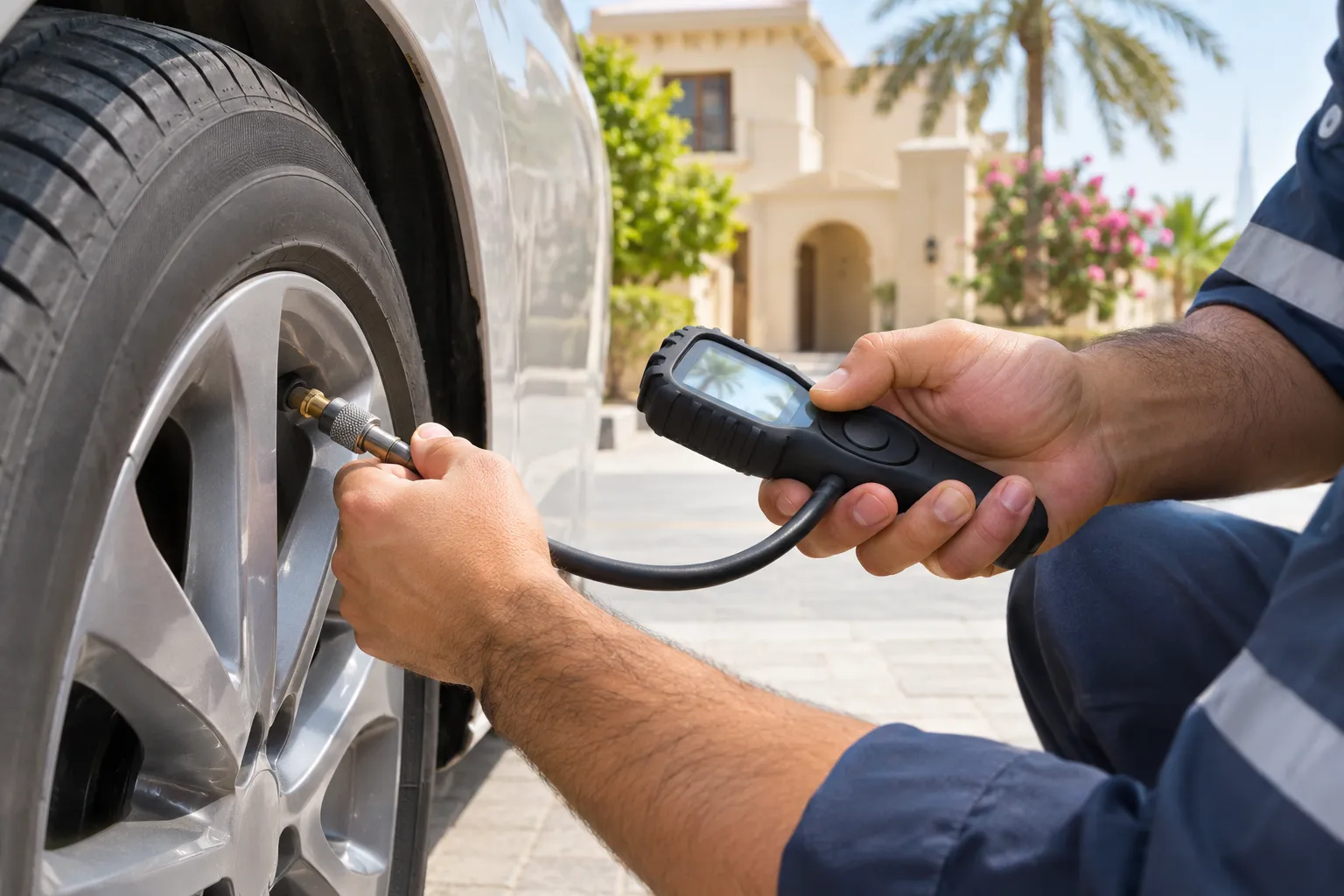
The best time to check is first thing in the morning before you drive, ideally in a shaded or basement car park. If you have to check at a petrol station after driving, add 3–4 psi to the placard figure as your target and recheck the next morning.
Myth 4: “Over-inflation causes summer blowouts”
I have attended a lot of summer tyre failures on the E311, the E611 and the Dubai–Al Ain road. I can’t remember one caused by a tyre that was simply too hard. The pattern is nearly always the same:
- The tyre has been 6–10 psi low for weeks.
- It’s driven fast on a hot afternoon, often with a full car.
- The overheated casing separates, the tread peels off, or the sidewall gives way.
Old tyres make this worse, because rubber hardens and cracks with age and UV exposure. If your tyres are more than five years from their manufacture date, read why tyres burst in summer before your next long drive.
Myth 5: “My TPMS will tell me if anything’s wrong”
Tyre pressure monitoring systems are very useful, but most only warn when a tyre is about 20–25% below the specified pressure. On a 34 psi car that’s 26–27 psi, well into the danger zone for highway driving in summer. Some systems also show live readings; use those, but treat the warning light as the last alert, not the first. If the light is already on, our article on the TPMS warning light explains what to do next.
A simple summer routine
- Buy a gauge. A decent digital or dial gauge is cheap and more trustworthy than many forecourt machines.
- Check cold, every two weeks from June to September, monthly the rest of the year. Do it on a weekend morning before the first drive.
- Set to the placard figure. Use the full-load figure for long or loaded trips.
- Don’t forget the spare. Space-saver spares often need 60 psi; check the label on the spare or in the manual.
- Look at the tyres while you’re there. Cracks, bulges, nails, uneven wear.
- Note the pressures on your phone. A tyre that keeps losing 3 psi more than the others has a slow leak.
Does nitrogen help in the heat?
Nitrogen is dry and leaks through rubber slightly more slowly than compressed air, which is already about 78% nitrogen. The result is steadier pressure between checks. It still expands with heat in almost the same way. I put it in the “nice to have” column: worth it on new tyres (we fill them free), not a reason to stop checking. For the full comparison, see nitrogen tyre inflation.
When a pressure problem is really a puncture
If one tyre needs topping up every few days, something is wrong. Common causes we find in summer:
- A screw or nail in the tread, often from construction areas
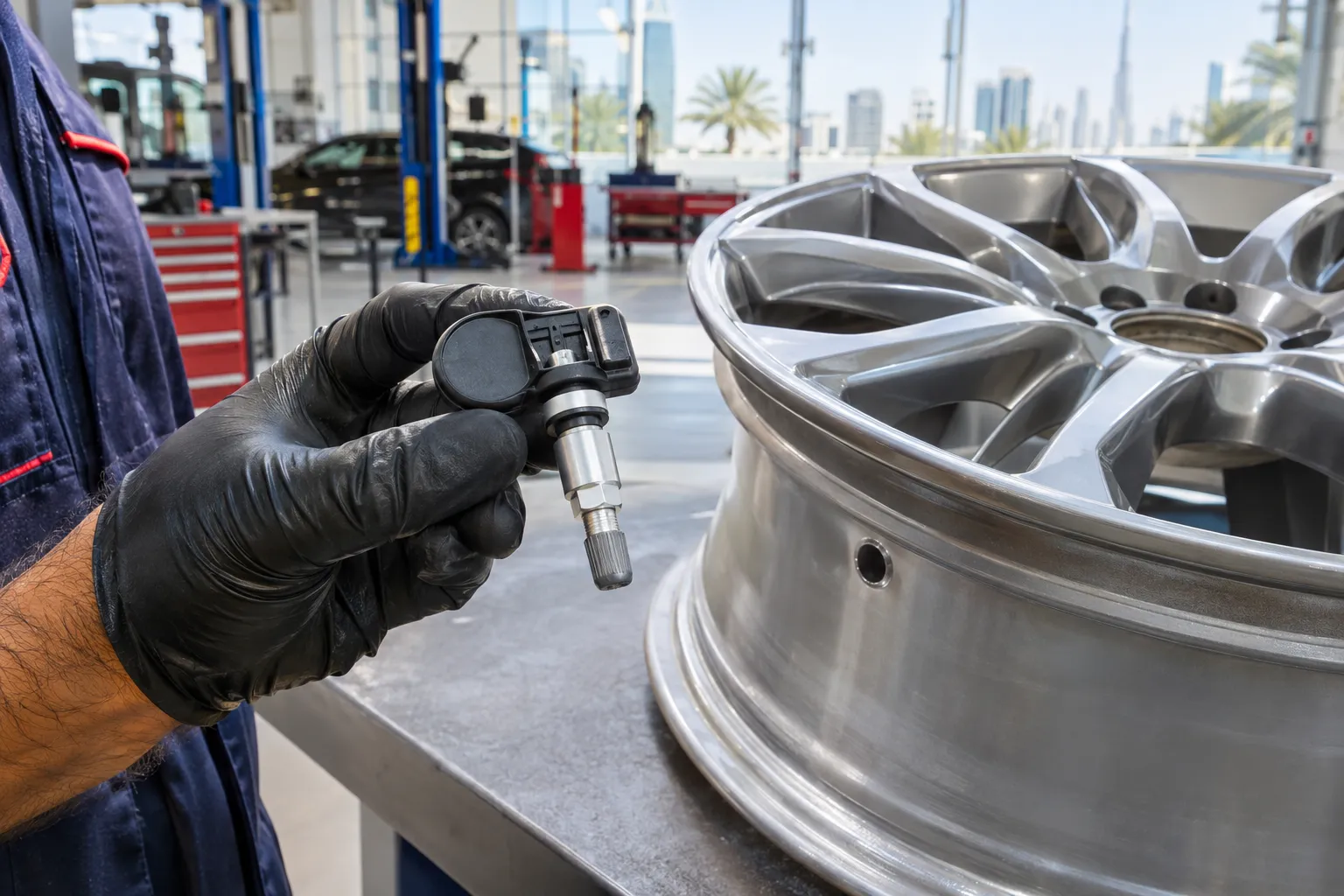
- A corroded or perished valve, especially on cars parked outside for years
- A bead leak on a rim with kerb damage or corrosion
- A cracked alloy
Each of these is a quick fix if caught early. Left alone, a slow leak becomes a soft tyre on a hot highway.
Pressure for SUVs, loaded cars and desert trips
Big 4x4s add a few twists. Many Land Cruisers, Patrols and pickups list one pressure for normal driving and a higher one for full load or sustained high speed. If you’re heading to Liwa with five people, cool boxes and a roof tent, use the higher figure for the highway part of the trip.
Off-road, drivers commonly drop pressures to somewhere around 15–20 psi for soft sand. That’s fine on the dunes at low speed, but the most common mistake I see is driving home on the highway without reinflating. A 4x4 at 18 psi doing 120 km/h on the E11 in August is building heat in the sidewalls very quickly. Carry a proper 12 V compressor and reinflate to the placard figure before you leave the sand. My article on tyres for desert driving goes into tyre choice and deflation in more detail.
If you tow a boat or caravan, check the trailer’s tyres as well. Trailer tyres sit unused for months, lose pressure and age in the sun, and they fail on the road more often than car tyres.
Get it checked for free
If you’re not sure your gauge is accurate or want a second pair of eyes on the tyres before a summer road trip, drop by our Al Quoz workshop for a free tyre pressure check. We’ll set all four tyres and the spare to the placard figure and tell you honestly if any of them need attention.
Frequently asked questions
Should I lower my tyre pressure in summer in the UAE?
No. Set your tyres to the cold pressure on the driver's door placard all year. Lowering it to allow for heat makes the tyre flex more, which builds even more heat and raises the risk of a blowout.
What is the normal car tyre pressure in Dubai?
Most sedans and crossovers specify between 30 and 36 psi cold, and many SUVs between 32 and 38 psi. The correct number for your car is on the placard inside the driver's door jamb.
How much does tyre pressure rise in the heat?
Roughly 1 psi for every 5–6 °C rise in tyre temperature. After a drive on a summer afternoon, readings 3–5 psi above the cold figure are normal and should not be let out.
Is nitrogen better than air for UAE summer?
Nitrogen loses pressure a little more slowly and is dry, so readings are more stable, but it still expands with heat. It helps; it does not replace regular checks. We charge AED 10 per tyre, free with new tyres.
About the author
Fazir Kamal — Fazir Kamal is a tyre technician with five years of hands-on work on UAE roads — roadside punctures on Sheikh Zayed Road at 2 a.m., run-flat fitments in DIFC basements, alignment on desert-driven Patrols. He writes and reviews the technical guides on TyrePuncture.ae.